
7 Clear Signs of a Raccoon Infestation in Your Home
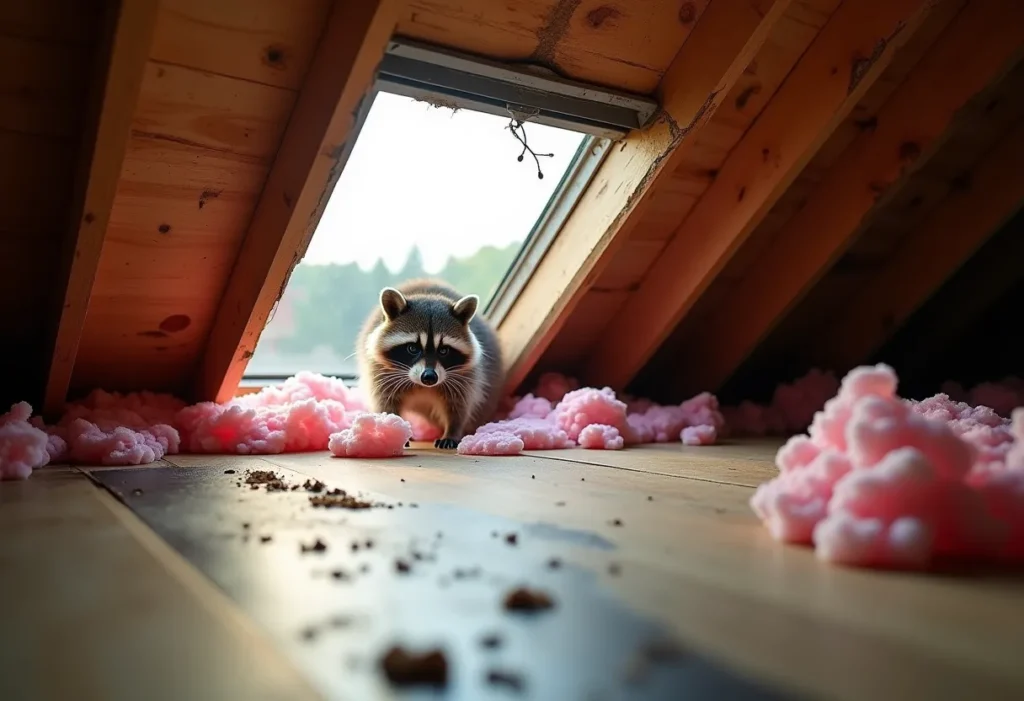
Strange thumping in the attic at 2 a.m. is unsettling enough, but what really concerns most homeowners is not knowing what’s up there or how serious the problem might be. Raccoons are among the most common wildlife intruders in Ottawa-Gatineau homes, and they leave behind distinct evidence once you know what to look for.
This guide covers the seven clearest signs of a raccoon infestation, explains why these animals pose real risks to your home and health, and walks through what effective removal and prevention actually involve.
How raccoons get into your home
Raccoon infestations typically show up as nocturnal thumping or scratching in attics and walls, overturned trash cans, and distinctive five-toed paw prints that look like small human hands. You might also notice damaged roof vents, torn soffits, pulled-back shingles, strong musky odors, and large dark droppings near potential entry points.
Raccoons are surprisingly resourceful when it comes to finding their way inside.
Their front paws work almost like hands, which means they can grip, pull, and pry at weak spots most other animals would ignore.
The most common entry points include:
- Roof vents and soffits:Raccoons pry open weak or damaged vent covers without much effort.
- Chimneys:An uncapped chimney is essentially an open door leading straight into your home.
- Gaps in eaves and fascia boards:Rotting wood or loose materials around the roofline come apart easily under a raccoon’s grip.
- Roof edges near tree branches:Overhanging limbs give raccoons a direct path to your roof.
In the Ottawa-Gatineau area, raccoons become especially determined to find shelter during spring when females are looking for safe places to give birth and raise their young.
7 warning signs of raccoons in your home
Catching a raccoon problem early makes a real difference. The longer raccoons stay, the more damage they cause and the harder cleanup becomes. Here’s what to watch for.
Scratching and thumping sounds at night
Raccoons are nocturnal, so you’ll hear them after dark. The sounds are distinctive: heavy footsteps, loud thumping, scratching, and sometimes chittering or growling coming from your attic, walls, or chimney.
What sets raccoon sounds apart from mice or squirrels is the weight behind them. A raccoon moving through an attic sounds like something substantial is up there, not the light scurrying of smaller animals.
Strong odors from urine and feces
A persistent ammonia smell from urine, combined with a musty odor from droppings, points to raccoons. The smell gets worse over time and can eventually drift down into your living space.
Many homeowners first realize they have a problem when the odor becomes hard to ignore. By that point, the contamination is usually significant.
Raccoon tracks around your property
Raccoon tracks are easy to identify once you know what to look for. The prints have five toes and resemble small human hands, which is unlike any other common wildlife in the region.
| Feature | Front paws | Hind paws |
| Shape | Shorter and wider | Longer and more elongated |
| Appearance | Hand-like with spread fingers | Foot-like with a longer heel |
| Size | About 2-3 inches | About 3-4 inches |
Check for tracks in muddy areas, on dusty attic surfaces, near downspouts, and around garbage bins. Muddy prints on your siding or near the roofline are a strong indicator that raccoons are climbing up to find entry points.
Damage to roof vents, soffits, and eaves
Raccoons leave visible evidence of forced entry. Look for torn vent screens, ripped fascia boards, pulled-back shingles, scratched or bent flashing, and holes in rooflines.
The damage tends to appear suddenly and looks more extensive than what smaller animals cause. Raccoons don’t just squeeze through existing gaps—they create new ones.
Scattered garbage and disturbed bins
Tipped-over garbage cans, torn bags, lids thrown aside, and food scraps scattered across the yard are classic signs of raccoon activity. Raccoons are strong enough to open many latched containers, and they’re persistent once they find a reliable food source.
If your garbage keeps getting disturbed night after night, raccoons have likely added your property to their regular route.
Torn insulation and nesting materials in your attic
Inside the attic, raccoons build nests by tearing up whatever materials are available. You might see insulation bunched into piles, shredded cardboard or fabric, and visible trails packed down through the insulation.
Nesting activity picks up in spring when females prepare to give birth. A mother raccoon will create a substantial nest, and the damage to insulation can be extensive by the time you discover it.
Changes in pet behavior near walls or the attic
Dogs and cats often detect wildlife before you do. Their hearing is far sharper, and they can sense animals moving within walls or above ceilings.
Watch for your pet staring intently at a ceiling or wall, barking or whining at a specific spot, or acting unusually restless. Pets don’t typically fixate on empty spaces without reason.
Do raccoons poop in the same spot
Yes. Raccoons create what wildlife professionals call “latrines,” which are designated spots where they return repeatedly to defecate and urinate. Finding a latrine is a strong sign of an established infestation rather than a raccoon just passing through.
- Appearance:Latrines contain piles of dark, tubular droppings with blunt ends.
- Common locations:Raccoons prefer flat, elevated surfaces like rooftops, attic corners, decks, and areas near the base of trees.
- Why latrines matter:Infected raccoons shed millions of roundworm eggs at latrine sites, creating serious health risks from parasites and bacteria.
Warning: Never touch or try to clean up raccoon droppings without proper protective equipment. Disturbing the droppings can release raccoon roundworm eggs into the air — two children were sickened in a 2024 case linked to a rooftop latrine — and those eggs remain infectious for years.
Why a raccoon infestation is dangerous
A raccoon in your home creates more than noise and inconvenience. The health hazards and property damage add up quickly, often in ways that aren’t immediately visible.
Health risks from raccoon droppings and urine
Raccoon waste carries several diseases that can affect humans:
- Raccoon roundworm (Baylisascaris):Microscopic eggs in raccoon droppings become airborne when disturbed. Inhaling or ingesting these eggs can cause serious illness.
- Leptospirosis:A bacterial infection spread through contact with raccoon urine, which can contaminate surfaces and soil.
- Rabies:Raccoons are among the most common rabies carriers in Ontario and Quebec, with raccoon-variant rabies confirmed in Quebec in late 2024 for the first time since 2015.
Handling raccoon droppings or contaminated materials without professional help puts your health at risk.
Damage to insulation and attic structures
Raccoons compress, tear, and soil attic insulation, which reduces its ability to regulate temperature. Over time, heating and cooling costs go up, though many homeowners don’t connect the increase to the infestation. Depending on your policy, insurance may cover raccoon damage to attic structures.
Urine and feces soak into insulation and wood, creating odors that linger long after the animals are gone. Removing the contamination often requires professional attic restoration and insulation replacement.
Electrical damage and fire hazards
Raccoons chew on materials in the attic, including electrical wires. Damaged wiring hidden in walls or insulation can go unnoticed until something fails, and the combination of chewed wires and dry nesting materials creates a real fire risk.
How to get rid of raccoons safely
Professional removal is the most reliable approach. Raccoons are strong, intelligent, and can become aggressive when cornered, especially mothers protecting their young.
A professional service starts with a thorough inspection to identify all entry points, count the animals, and assess the damage. Humane removal methods like live trapping and one-way exclusion doors comply with Ontario and Quebec wildlife regulations while resolving the problem effectively.
DIY attempts often fail and can make things worse. Separating a mother raccoon from her babies, for example, leads to more damage as she tries to get back to them. Wildlife control technicians understand raccoon behavior and can handle the situation without creating new problems.
Request a quote from Aspen Wildlife Control if you’re dealing with raccoons in your Ottawa or Gatineau home.
How to prevent raccoons from returning
Removing raccoons is only part of the solution. Raccoons have excellent memories and will return to places where they’ve found shelter before, so prevention matters just as much as removal.
Seal entry points and repair exterior damage
All gaps, vents, and damaged soffits require securing with heavy-gauge, chew-proof materials. Standard screening or lightweight repairs often fail within weeks because raccoons can tear through them.
Professional repairs address not just the obvious entry point but also potential weak spots that raccoons might target next.
Secure garbage bins and remove outdoor food sources
Making your property less appealing to raccoons helps keep them from coming back:
- Use garbage bins with locking or weighted lids
- Bring pet food and water bowls inside at night
- Clean up fallen fruit from trees and spilled birdseed regularly
- Store garbage bags in a secure garage or shed until collection day
Trim trees and branches near your roof
Overhanging branches give raccoons a direct path to your roof. Keeping tree limbs trimmed back several feet from the roofline removes this common access route.
Even branches that look too thin to support a raccoon can serve as a pathway. Raccoons are agile climbers and will use whatever route is available.
Get fast raccoon removal in Ottawa and Gatineau
Aspen Wildlife Control has served the Ottawa-Gatineau region for over 25 years, providing humane raccoon removal, thorough inspections, and complete solutions that include repairs and attic restoration.
If you’ve noticed any of the warning signs covered here, acting quickly can prevent further damage and health risks. Contact us today for a quote and get back to feeling safe in your home.